

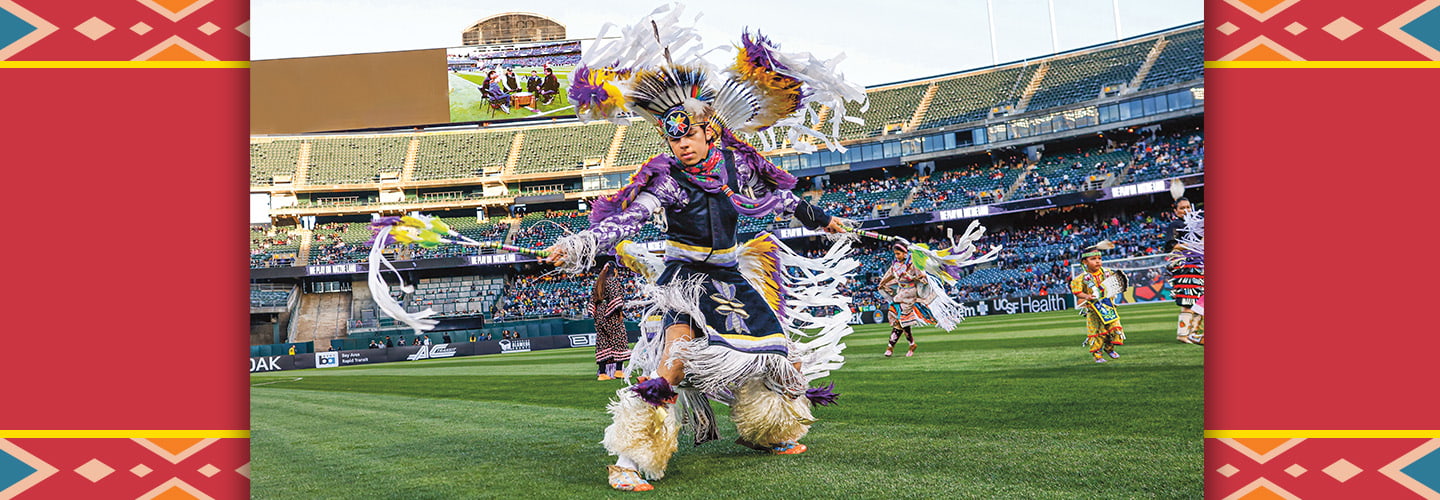

When Tank Young enters the dance circle at a powwow, he is transformed. Instead of sporting his usual T-shirt and shorts, Tank, 16, appears in full regalia. He wears leather moccasins, fur leg wrappings, and an apron and arm bands adorned with colorful ribbons and beads. Eagle feathers stick straight up on his head and jut out from his back like wings. Tank steps and spins to the beat of a drum, bending his knees to touch the ground and rhythmically waving batons covered in ribbons.
Tank, who lives in San Lorenzo, California, is part of a line of Native American dancers that stretches back thousands of years. Dance has long played a vital role in Native American life, from storytelling to celebrations to spiritual and healing rituals. Today Native dance is largely seen at powwows, gatherings of Indigenous people where dancers like Tank come together to honor their heritage and carry their traditions into the future. “I dance for people that can’t dance,” says Tank. “Those whose bodies won’t allow them to, or elders who can’t go to the powwow.”
The modern powwow was born from a desire to hold on to tradition despite discrimination. In the late 19th century, the U.S. government banned Native dance as part of an effort to force Native American people to assimilate. In response, Native communities adapted their dances into versions that could be legally performed in public at gatherings they called powwows (from the Narragansett Indian Tribe’s word pau wau, meaning spiritual leader).
In the 1950s, government programs encouraged and, in many cases, forced thousands of Native people to relocate from reservations to cities across the country. There, people from different tribes intermingled more than before. This amalgam of Native cultures is what’s seen at powwows today. Each year more than one thousand powwows take place across the U.S. and Canada, with many of them drawing hundreds or even thousands of participants. They include craft vendors, food stalls, drum circles, and, of course, dancing.
Tank Young totally transforms when he enters the dance circle at a powwow. The 16-year-old usually wears a T-shirt and shorts. But when he’s dancing, he dresses in full regalia. That includes leather moccasins and fur leg wrappings and an apron and arm bands that are decorated with colorful ribbons and beads. Eagle feathers stick straight up on his head. More jut out from his back like wings. Tank steps and spins to the beat of a drum. He bends his knees to touch the ground. He waves batons covered in ribbons.
Tank lives in San Lorenzo, California. He’s part of a line of Native American dancers that stretches back thousands of years. Dance has long played a role in Native American life. It’s vital to storytelling, celebrations, and spiritual and healing rituals. Today Native dance is largely seen at powwows. Dancers like Tank come together at these gatherings of Indigenous people. They honor their heritage and carry their traditions into the future. “I dance for people that can’t dance,” says Tank. “Those whose bodies won’t allow them to, or elders who can’t go to the powwow.”
The modern powwow came from a need to hold on to tradition despite discrimination. The U.S. government banned Native dance in the late 19th century. It was part of an effort to force Native American people to assimilate. Instead, Native communities adapted their dances. They created versions that could be legally performed in public. They danced them at powwows. (The term comes from the Narragansett Indian Tribe’s word pau wau, meaning spiritual leader.)
In the 1950s, thousands of Native people moved from reservations to cities across the country. Government programs encouraged, and often forced, them to move. People from different tribes met because of this. This mix of Native cultures is what’s seen at powwows today. Each year more than one thousand powwows take place across the U.S. and Canada. Many draw hundreds or even thousands of participants. They include craft vendors, food stalls, drum circles, and dancing.