

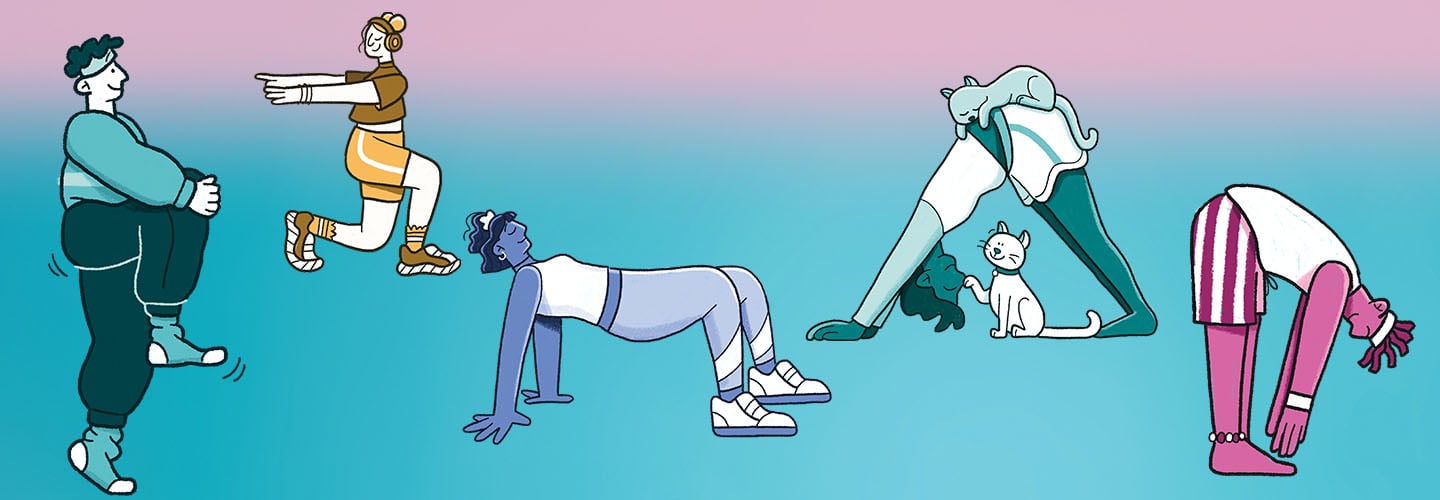

Your first introduction to stretching might have come from your gym teacher, your coach, or your dance instructor: touching your toes, doing the butterfly stretch (sitting with the soles of your feet together), or warming up your shoulders with arm circles. Have you ever wondered, as you reach your fingertips toward your feet, “What’s the point of stretching anyway?”
It turns out stretching is important to keeping your body healthy and injury-free. Pre- and post-exercise stretching helps your muscles move the way they’re supposed to, says Chloe Costigan, a physical therapist who works with teen athletes. “Think of your muscles getting wrinkly and dirty,” she says. “Stretching helps clean and iron them so they are fresh.”
Stretching benefits more than your muscles. It also boosts your mental health. When you’re stressed, your muscles can become tight and tense. Not only does stretching help loosen them up, but research has found that it can boost levels of serotonin, a hormone that makes us feel good.
There are two main types of stretches: dynamic and static. Dynamic stretches use movement to warm up your muscles and are great to do before you exercise, Costigan says. Static stretches—when you hold a position for 30 seconds—help calm down muscles after exercise. Adding deep breathing to your stretches—inhaling when you lengthen your muscles and exhaling when you contract them—can make stretching even more beneficial (see Safe Stretching Tips).
It only takes a few minutes to warm up your muscles with a simple stretching routine, Costigan says. Try these stretches before and after a workout, when you feel tense, or anytime you need a break.