
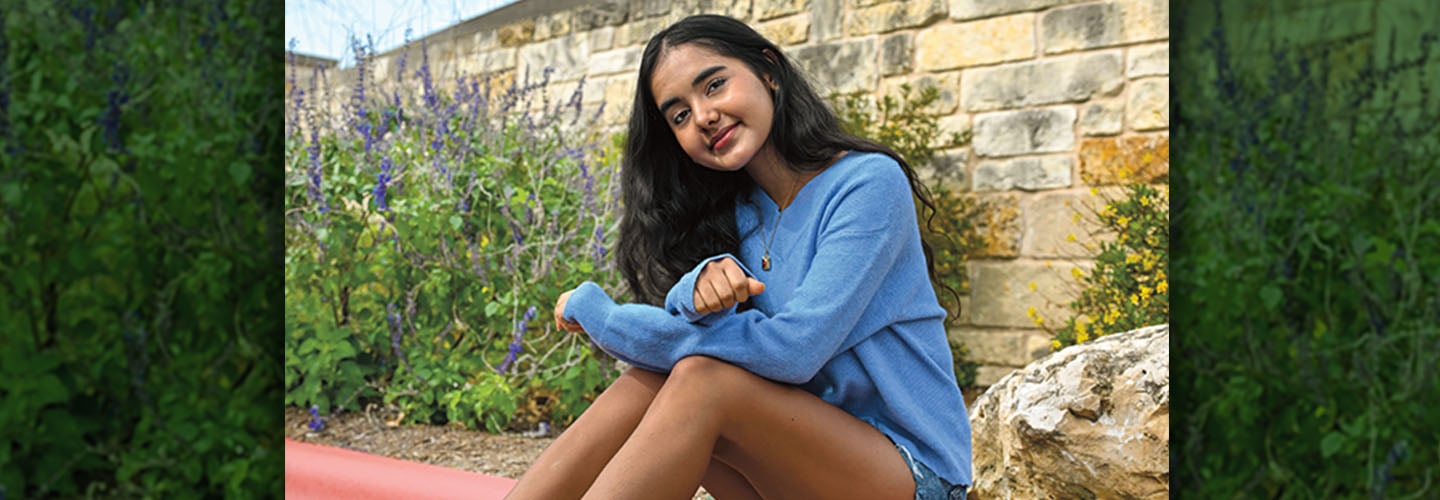

Diya M. needed to gain weight—that’s what the doctors told her. She was in eighth grade and had been hospitalized for anorexia, an eating disorder that involves severe calorie restriction and, often, unhealthy weight loss. “I had been struggling for months,” Diya says. “Then my health got to a point where I was rushed to the hospital and placed into recovery.” Part of her recovery meant working to regain the weight she had lost.
Like many teens looking for guidance, Diya turned to social media. There she found posts about “high-protein bulking” and tips about gaining weight without gaining fat. The more content Diya watched, the more these videos crowded her feed. Soon her entire “For You” page was filled with gym influencers and “What I Eat in a Day” clips—endless content claiming that with “clean” eating and intense workouts, Diya could gain weight only as muscle.
Inspired by these posts, Diya cut out entire food groups from her diet, including sugar and almost all sources of fat. She stopped eating family dinners because she couldn’t control every ingredient, choosing instead to make all her own meals. Hanging out with friends got harder, because so many plans involved food she refused to eat. Soon much of her time revolved around searching for and cooking “clean” recipes. Diya thought her diet was healthy, but inside, she felt exhausted, anxious, and increasingly alone.
It wasn’t until Diya visited her doctor that she realized her recovery had gotten seriously off track. Her blood work revealed her sugar and calcium levels were far below normal. And her estrogen—an important hormone for girls during puberty—was undetectable. “I thought I was being super healthy, but my body was telling a different story,” she says.
Diya’s experience has a name: orthorexia. It describes an extreme focus on eating only “clean” foods or following very strict food rules. And more and more teens are dealing with it, often without realizing that their supposedly healthy lifestyles have quietly turned into something dangerous.